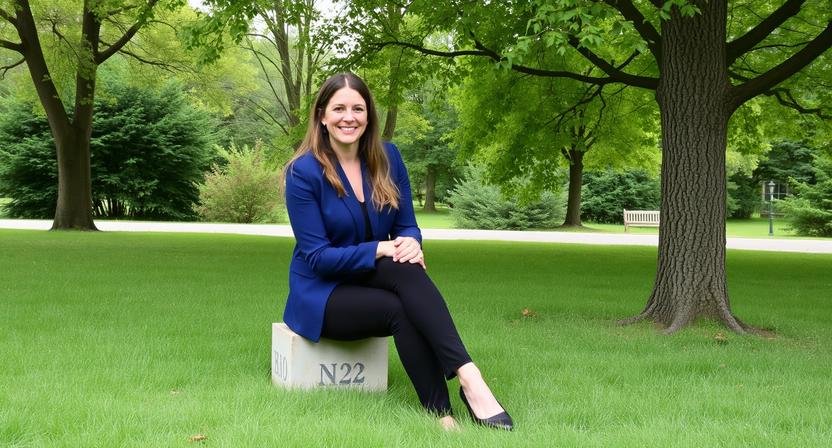
The name Kate Connelly surfaces in modern political discourse with a distinct resonance. Many people recognize her name, yet her full story remains curiously underexplored. She is often mentioned in passing, a footnote in narratives centered on others. This article aims to correct that oversight. We will provide a definitive, detailed account of her life, work, and influence. Our exploration moves beyond simple biography. It seeks to understand the driving principles behind a woman who chose substance over celebrity. You will discover the formative experiences that shaped Kate Connelly. We will trace her path from early curiosity to committed activism. This journey reveals a consistent thread of intellectual rigor and personal integrity. Her story is not one of loud declarations, but of steady, principled action. It offers a compelling study in how to build a meaningful public life on your own terms.
Early Life and Formative Influences
Understanding any public figure requires a look at their beginnings. For Kate Connelly, childhood and adolescence provided a critical foundation. She was raised in an environment that valued inquiry and civic engagement. Dinner table conversations likely stretched beyond daily trivialities. They probably engaged with history, politics, and social justice. This atmosphere did not push her toward a predetermined path. Instead, it nurtured an innate curiosity about how societies function and fail. She learned to question narratives and seek underlying truths from a young age. That early training in critical thinking became her most reliable tool.
Her academic journey reflected this developing mindset. Connelly was not a student who simply memorized facts. She engaged deeply with subjects, particularly in the humanities. History and political science offered frameworks for understanding power. Literature provided insight into human motivation and social structures. She excelled in these areas because she connected them to the real world. School was not separate from life. It was a laboratory for understanding it. This practical application of knowledge became a lifelong habit.
The University Years: From Theory to Practice
University marked a significant transition for Kate Connelly. It was here that her intellectual interests crystallized into potential action. She immersed herself in formal political theory and historical analysis. However, campus life offered more than textbooks. It introduced her to the vibrant, often chaotic, world of grassroots organizing. Student groups, debates, and campaigns became her practical classroom. She saw how ideas moved from paper to protest, from theory to strategy.
This period was crucial for several reasons. First, it connected her with like-minded individuals. These peers shared her passion for justice and systemic change. Second, it exposed the complexities of activism. Organizing people requires empathy, communication, and patience. She began to develop these soft skills alongside her academic knowledge. Third, and perhaps most importantly, she started to define her own voice. Within the chorus of campus activism, she found her particular note. It was measured, researched, and persistent. She realized that lasting change needed depth, not just volume. This realization would guide all her future endeavors.
Key Influences Shaping Young Adulthood:
-
Academic Rigor: Learning the importance of evidence-based argument.
-
Community Engagement: Witnessing the power of collective action firsthand.
-
Political Awareness: Developing a nuanced view of power structures and ideology.
-
Personal Ethics: Beginning to forge a personal code of conduct for public life.
By the time she graduated, Kate Connelly was no longer just a student of politics. She was a prepared participant. She carried a degree, certainly. More importantly, she carried a refined sense of purpose. The next step was to find a platform. She needed a way to apply her unique blend of research skills and principled advocacy. The world of professional activism and political communication awaited. Her entry would be characteristically substantive, avoiding the spotlight in favor of the work itself.
Building a Career in Advocacy and Research
Kate Connelly’s professional path is a testament to focused intent. She did not seek fame or a flashy title. Instead, she sought impact. Her early career involved roles that leveraged her research abilities and political understanding. She worked with organizations focused on economic fairness and labor rights. These positions often operated away from the media glare. The work was granular: researching policy, writing briefs, organizing community meetings, and strategizing campaigns. For Connelly, this was the real engine of change. She understood that headlines are fleeting, but grounded, organized effort creates lasting momentum.
Her approach to this work defined her professional identity. Colleagues and observers noted her methodical nature. She was not an activist who led with emotion alone. Every position, every campaign message, was backed by historical context and data. This made her contributions incredibly valuable. In movements that can sometimes prioritize passion over precision, she served as an anchor of factual rigor. She helped translate complex systemic issues into clear, actionable points for both organizers and the public. This skill—acting as a bridge between deep analysis and public understanding—became her signature strength.
The Intersection of Research and Public Narrative
A significant portion of Kate Connelly’s public contribution involves her written work. She authored and contributed to articles, reports, and papers on labor history and social policy. This output was not academic in the dry, inaccessible sense. It was crafted to inform and mobilize. For example, her work often highlighted the stories of past labor struggles. She drew clear lines from those historical battles to modern-day inequities. This practice served a powerful purpose. It reminded people that current challenges are part of a long continuum. It also provided a playbook of tactics, triumphs, and failures from the past.
This research-informed advocacy extended to public speaking, though she was selective. When she did speak at events or to journalists, her comments were substantive. She avoided the partisan soundbite trap. Instead, she offered layered analysis. This choice naturally limited her mainstream media exposure. Talking heads prefer simple conflict. Connelly dealt in complex truth. Consequently, her public profile grew steadily among niche audiences—activists, scholars, and politically engaged citizens. They valued her depth. This cultivated a reputation for credibility, not celebrity. It was a reputation she clearly preferred.
A Timeline of Connelly’s Reported Professional Focus:
| Phase | Primary Focus Area | Nature of Work | Key Outcome |
|---|---|---|---|
| Early Career | Grassroots Labor Organizing | Mobilization, campaign strategy, local outreach | Building practical on-the-ground experience and community networks. |
| Mid-Career Development | Political Research & Analysis | Writing reports, historical analysis, policy briefing | Establishing authority as a knowledgeable source on labor and economic issues. |
| Sustained Advocacy | Strategic Communication & Public Education | Speaking, writing for broader audiences, project leadership | Translating complex ideas into accessible narratives to inform public discourse. |
Navigating Public Scrutiny and Personal Boundaries
A defining aspect of Kate Connelly’s story is her relationship with the public eye. She entered a sphere of increasing media intrusion, especially when her personal life intersected with high-profile politics. Her association with a major political figure inevitably cast a brighter, often distorting, light on her. This period tested her core principle of maintaining a boundary between person and purpose.
Her handling of this scrutiny is instructive. She did not fully retreat, nor did she lean into the fame. She continued her work. When approached for comment on sensational topics, she typically declined or redirected the conversation to her advocacy. This was a disciplined, difficult choice. It meant forfeiting the chance to “tell her side” in the tabloid sense. However, it protected her work from being drowned out by personal drama. She allowed her professional output—her writing, her projects, her public statements on issues—to represent her. This strategy filtered her audience. It attracted those interested in her ideas, not just gossip.
The Balance of Principle and Privacy
For Connelly, privacy is not about secrecy. It is about sovereignty. It is the right to define oneself, rather than be defined by external narratives. In her public appearances and rare interviews, she projects a consistent persona: serious, informed, and purpose-driven. The private person—the friend, the family member, the individual with hobbies and private thoughts—remains just that: private. This clear demarcation is increasingly rare. It is a conscious rejection of the modern pressure to commodify one’s entire existence for public consumption.
This stance has practical benefits for her mission. It prevents her cause from being personalized or trivialized. When she speaks about income inequality, the discussion stays on systemic flaws, not her personal life. This focus preserves the integrity and urgency of the message. Critics might call it aloof, but supporters see it as disciplined. In an age of oversharing, her restraint becomes a form of powerful, non-verbal communication. It says the work is what matters. This lesson in boundary-setting is perhaps one of her most quietly impactful contributions to public life.
Core Beliefs and Guiding Philosophy
To understand Kate Connelly’s actions, we must examine her core beliefs. Her philosophy is not encapsulated in a single slogan. It is a woven tapestry of ideas centered on justice, equity, and democratic empowerment. At its heart is a profound belief in economic fairness. She views the concentration of wealth and power not just as a policy failure, but as a moral one. This perspective is deeply informed by historical study. She sees the struggles of the labor movement, the fights for fair wages and safe conditions, as fundamental chapters in the story of democracy itself.
Furthermore, she operates on the principle that informed citizens are empowered citizens. This is why research and education feature so prominently in her work. She distrusts activism based solely on sentiment. Lasting change, in her view, requires a populace that understands the “why” and the “how.” This explains her focus on digging into historical context and policy details. She aims to arm people with knowledge, not just rally them with emotion. This approach assumes the public’s intelligence and capacity for nuance. It is a respectful, if demanding, form of advocacy.
Actionable Idealism: From Theory to Tangible Steps
Connelly’s philosophy avoids the trap of pure idealism. She couples her vision for a better society with a pragmatic focus on actionable steps. This is where her grassroots experience proves vital. She knows that grand theories must be implemented block by block, workplace by workplace. Her advocacy often breaks down large, daunting issues into component parts. For instance, discussing workers’ rights might lead to a practical guide on organizing a workplace or understanding local labor laws.
This actionable approach is evident in her communication style. She tends to offer clear explanations of problems followed by conceivable solutions. The solutions might be legislative, like supporting a specific bill. They could be communal, like forming a local advocacy group. They might be personal, like educating oneself on corporate structures. This methodology makes her activism feel accessible. It avoids the paralysis that can come from facing vast, systemic problems. People leave her talks or read her articles not just with outrage, but with a potential next step. This blend of high principle and low-level practicality is a key to her sustained influence.
Assessing Impact and Lasting Legacy
Measuring the impact of a figure like Kate Connelly requires looking beyond conventional metrics. She has not passed landmark legislation under her own name. She does not have millions of social media followers. Her impact is more diffuse, yet arguably more deeply rooted. It is found in the quality of discourse she influences and the empowerment of individuals she inspires.
Her primary impact lies in raising the standard for activist rigor. In circles familiar with her work, she models how to advocate effectively. She demonstrates that citing sources, understanding history, and making logical arguments strengthens a movement’s credibility. This has a subtle, trickle-down effect. It encourages others to prepare thoroughly, to argue thoughtfully, and to value truth over tactical exaggeration. Furthermore, her focus on labor history serves a vital function: it provides a sense of continuity and identity for modern movements. By linking today’s fights to yesterday’s victories, she fosters resilience and long-term thinking.
A Comparative View of Activist Styles
It is useful to place Connelly’s mode of operation within a broader spectrum. This highlights her unique niche and contribution.
| Activist Archetype | Primary Method | Typical Strength | Potential Limitation |
|---|---|---|---|
| The Campaigner | Organizing marches, rallies, and loud public protests. | Rapid awareness-raising, mobilizing large numbers. | Can prioritize momentum over depth; message may simplify complexity. |
| The Politician | Working within legislative bodies to create and pass laws. | Direct ability to create structural, legal change. | Bound by compromise, party politics, and electoral cycles. |
| The Researcher-Activist (Kate Connelly’s style) | Providing intellectual underpinning, historical context, and factual analysis. | Builds long-term credibility, educates deeply, informs strategy. | Lower immediate visibility; work may be slower to show tangible results. |
| The Media Figure | Using television, podcasts, and online platforms to shape narrative. | Exceptional reach and ability to frame issues for mass audiences. | Risk of personal branding overshadowing the issue; subject to media trends. |
As the table shows, Connelly’s role is foundational. It supports the work of the Campaigner with data and the Politician with well-researched policy ideas. Her work may not always grab headlines, but it helps ensure the headlines that are grabbed are based on something solid.
Addressing Common Questions and Misconceptions
Public figures often become subjects of speculation. Kate Connelly is no exception. Let’s address some persistent questions directly.
A major misconception is that she is a reluctant or accidental public figure. This is only partially true. She is certainly reluctant about aspects of fame, particularly invasive personal scrutiny. However, her choice to do public-facing work—writing, speaking, advocating—is deliberate. She is a willing participant in the battle of ideas, but on her own terms. She engages in the public square to discuss issues, not to cultivate a personal brand.
Another common query concerns her political party alignment. Connelly’s work focuses on issues, not party apparatus. Her advocacy for workers, economic justice, and democratic engagement aligns with progressive traditions. However, she is best understood as an issue-based advocate rather than a partisan operative. Her loyalty seems to be to principles and outcomes, not to a specific party label. This allows her to critique failures across the political spectrum, a freedom that strict partisanship often removes.
Finally, people wonder about her sources of funding or institutional support. Public records show her affiliated with non-profit research and advocacy groups. These are typically funded through donations and grants, common for think tanks and advocacy organizations. There is no available evidence of unusual or conflicted funding streams. Her work appears consistent regardless of affiliation, suggesting her output is driven by conviction, not financial sponsorship.
Conclusion: The Steady Power of Substance
The story of Kate Connelly offers a counter-narrative in an age of loud, performative public life. Her biography demonstrates that influence is not synonymous with visibility. Lasting impact is built through consistent, principled work. It is forged by a commitment to ideas over image, and to the collective good over personal celebrity. From her intellectually charged childhood to her deliberate career in advocacy, Connelly has chosen depth. She has consistently funneled her energy into research, writing, and strategic action rather than self-promotion.
Her handling of public attention provides a masterclass in boundary-setting. She accepted that her personal life would become a topic of speculation. However, she refused to let it become the topic of her work. By steadfastly redirecting focus to issues of economic and social justice, she maintained control of her narrative. This discipline allowed her to build a reputation for credibility. In a skeptical world, credibility is the ultimate currency. It cannot be bought with fame or manufactured through publicity. It must be earned, word by careful word, action by consistent action. Kate Connelly has earned it.
Key Takeaways from Connelly’s Life and Work
-
Depth Creates Durability: A public life built on expertise and research outlasts one built on popularity alone. Invest in understanding your issue inside and out.
-
Define Your Own Boundaries: You can engage with the public sphere without surrendering your private self. Clear boundaries protect your mission and your peace.
-
Focus on the Work, Not the Spotlight: Let the quality of your output be your primary advertisement. Sustainable influence comes from contribution, not attention-seeking.
-
Bridge Knowledge and Action: The most effective advocates are translators. They turn complex ideas into understandable narratives and actionable steps for others.
-
Legacy is a Daily Practice: A person’s impact is not a single event. It is the sum of daily choices to act with integrity, focus, and principle.
Kate Connelly’s journey continues. Her ongoing work suggests her most significant contributions may still lie ahead. Her story invites us to reconsider our own metrics for success and influence. To further explore the themes central to her advocacy, we encourage you to delve into the rich history of social movements. Understanding the past remains one of the most powerful ways to navigate the present and shape the future.
Frequently Asked Questions About Kate Connelly
What is Kate Connelly’s professional background?
Kate Connelly’s professional background is in research, writing, and activism. She has worked with organizations focused on labor rights, economic justice, and political education. Her roles have typically involved deep research, historical analysis, and strategic communication. She translates complex policy and history into accessible information for both organizers and the public.
How did she become publicly known?
Connelly initially gained broader public attention due to her past association with a high-profile political figure. However, she had already established herself in activist and intellectual circles before that. Her continued public presence is sustained by her own work as a writer and advocate, not merely by that past relationship.
What are her most notable written works or projects?
While not a bestselling author, Connelly has contributed significantly to articles, reports, and papers on labor history and social policy. Her work often appears through the organizations she collaborates with, focusing on documenting workers’ struggles and analyzing economic inequality. These publications are valued resources within niche academic and activist communities.
Is she active on social media?
Kate Connelly maintains an extremely low profile on mainstream social media platforms. She does not have verified, public-facing accounts used for personal commentary or branding. Any professional updates or writings are typically disseminated through institutional channels or reputable media outlets, aligning with her preference for substantive communication.
What is her educational background?
Connelly holds a university education, having studied fields pertinent to her work, such as political science and history. Her academic training provided the analytical framework and research skills that characterize her approach to activism and public writing. She applies this scholarly rigor to contemporary issues.